WHERE IT STARTED (1950s - 1990s)
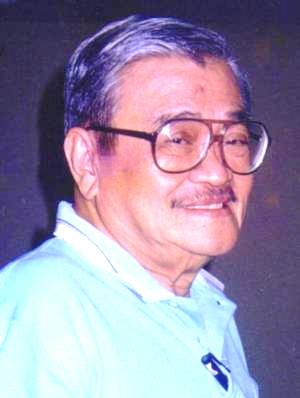
Animation in the Philippines is rooted from local cartoons and comics, being its foundation in storytelling (Duran, 2014). It was during the American Colonization, shortly before World War II, that animation was introduced in the Philippines. The arrival of television in the Philippines gave way for early animations to be used in advertising products (David & Pareja, 2017). Prominent figures during this era include the Father of Filipino Comics, Antonio S. Velasquez, who introduced cartoon advertising, and cartoonist Larry Alcala, who pioneered the earliest known animated commercials for Darigold Milk and Caltex during 1957 and 1965. The latter also animated a short black-and-white exercise on 8mm film of a girl jumping rope and a boy playing with a yo-yo. Cartoon advertisements continued to be prevalent, and more animators became prominent. Such an example is the 1955 six-minute ad created by Jose Zabala-Santos and Francisco Reyes’, “Juan Tamad.” Based on the folklore character, the ad was made to advertise Purico cooking oil.
The 1960s - 1970s was the period where animation in the Philippines started to branch out from advertisements, to storytelling and political use. From 1974 to 1979 , cartoonist Severino “Nonoy” Marcelo created a seven-minute animated clip for the film “Annie Batungbakal,” animated film “Tadhana,” and a 60-minute animated feature adaptation of “Biag ni Lam-ang.” Tadhana in particular was commissioned by former president Ferdinand Marcos Sr., based on his book of the same name. The film was created in collaboration with Jose Zabala-Santos, and was initially conceptualized to serve as the pilot episode for a TV series, telling the history of the Philippines from the perspective of the Marcos administration. Tadhana is considered to be the first feature-length cel animation in the Philippines.
The 1980s - 1990s marked a turning point in the Philippine animation industry, with the establishment of foreign companies in the country, such as Burbanks Studios and AsianAnimation Studios. It was also during this era that Geraldo A. Garcia (otherwise known as Geirry Garcia) would become a prominent figure in Philippine animation history. In 1986, Garcia produced “Ang Panday,” based on the comic of the same name by author Carlo J. Caparas. Ang Panday is credited to be the very first local animated TV series. In 1995, he directed “Isko: Adventures in Animasia” along with Mike Relon. It was a live-action film that featured a 30-minute animation sequence. In 1997, Garcia directed “Adarna: The Mythical Bird,” adapting the “Ibong Adarna” epic poem. Adarna is commonly credited as the first full-length animated film in the Philippines.
FROM TRADITIONAL TO DIGITAL (2000s - 2010s)
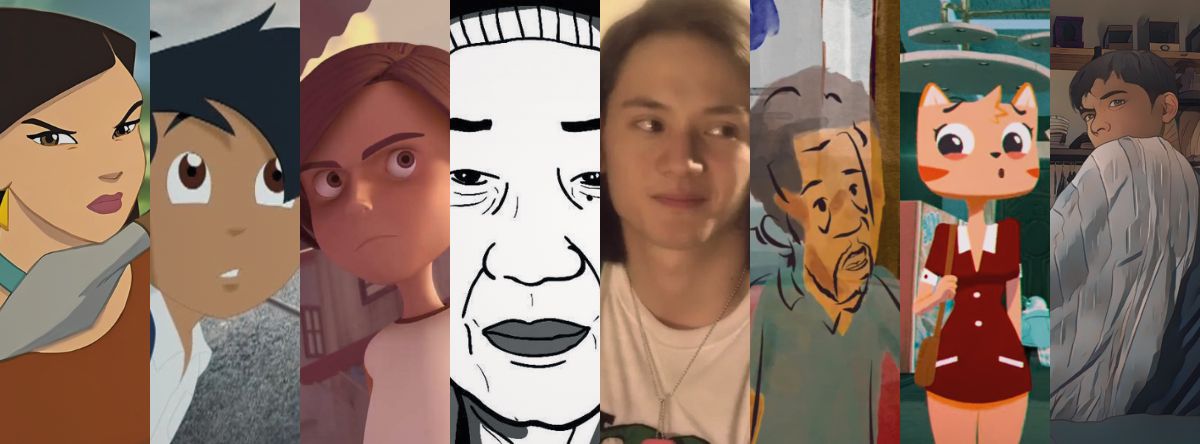
Majority of Philippine animation in the 2000s were catered towards a younger audience, with fantasy being a common genre during this time. In 2007, the annual animation festival named Animahenasyon was founded by the Animation Council of the Philippines (ACPI). This festival was established to encourage aspiring Filipino animators to showcase their creations, and to spread awareness of the existence of original local content (Florentino, 2018). In the same year, Ramon Lopez and Jesse Hernandez created the adult animated TV series “The Nutshack,” which aired on Myx TV and ran until 2011. In 2008, two animated feature-length films were released, namely “Urduja” and “Dayo: Sa Mundo ng Elementalia.” Urduja is based on the legend of the warrior princess, while Dayo is about Philippine mythology. The latter is also the first digitally animated film in the Philippines. From 2009 to 2010, the animated series titled “Super Inggo at ang Super Tropa” was broadcasted on ABS-CBN. It is a spin-off of the fantaserye “Super Inggo.”

2010 marked a turning point in Philippine animation history with the release of “RPG Metanoia,” the first CGI film to be produced in the country. This film tackles the rise of online video games, and introduces traditional Filipino outdoor games. As of 2026, it is still the only Philippine CGI animated film. The 2010s for Philippine animation gradually opened to more diverse animation styles and delved into handling more mature themes. In 2015, Carl Joseph Papa directed “Manang Biring,” an adult comedy-drama film that explores themes of old age, family reunion, and coping with cancer. Manang Biring is the first fully rotoscoped film in the Philippines.
In 2016, Avid Liongoren directed Saving Sally, a film that blends live-action and animation. The film is a teenage love story that also explores themes of abuse. In 2018, the first Philippine anime TV Series “Barangay 143” was released. The anime is a coming-of-age story and is centered on basketball.
PRESENT (2020s)
In 2020, Liongoren directed “Hayop Ka!,” a telenovela-inspired animated film that features anthropomorphic animals. It was released on Netflix, available both in the original Filipino dub and English dub. In 2023, the sci-fi drama film “Iti Mapukpukaw” was released. Directed by Carl Joseph Papa, it is the second rotoscopped film in the Philippines. In 2025, it was announced that the 2020 short film titled “Ella Arcangel” would be getting a feature film, which is set to release in 2026.